
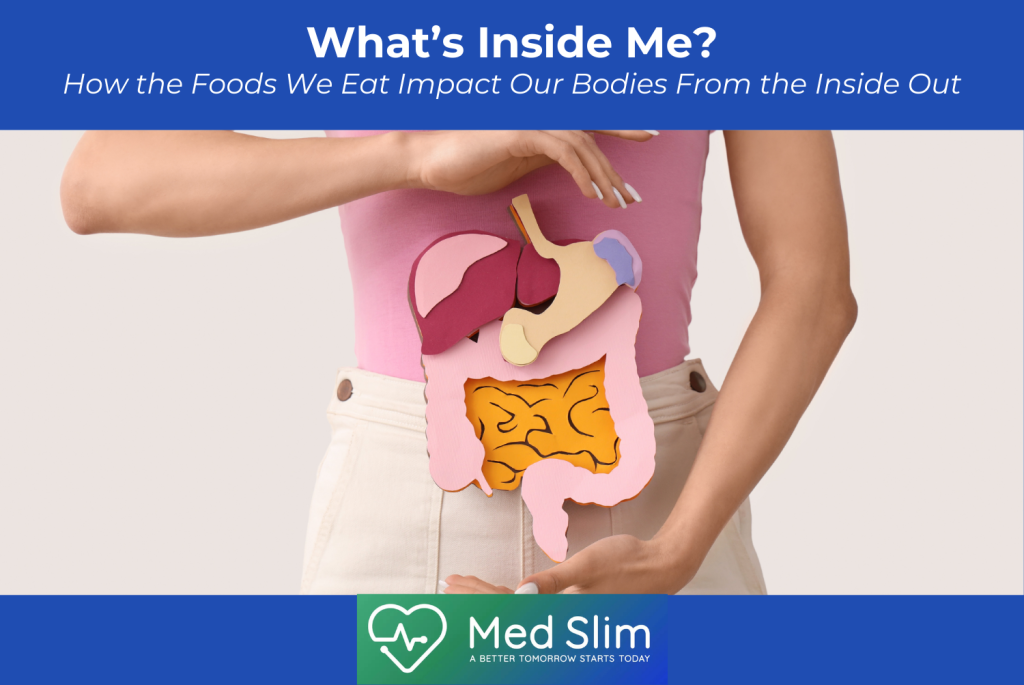
 In today’s fast-paced world, it’s easy to overlook the impact that our dietary choices have on our bodies. Foods high in sugar, processed carbohydrates, and unhealthy fats might satisfy our taste buds, but they can wreak havoc on our body systems, especially the gastrointestinal (GI) tract, liver, and other essential organs. At Med Slim, we believe in empowering our community with knowledge about how these choices affect our health from the inside out. Let’s dive into the journey of food through your body and understand how different dietary choices can influence your health.
The Journey of Food Through the Body
Every time we eat, our body engages in a complex digestive process to break down food into energy and nutrients. Here’s a look at the journey food takes and the toll certain ingredients can have on each organ:
- The GI Tract: Our digestive system breaks down food into smaller molecules for nutrient absorption. When we consume a lot of refined sugars and carbohydrates, it can disrupt this process, leading to an imbalance in gut bacteria, also known as dysbiosis. This imbalance can cause digestive discomfort, bloating, and even chronic conditions like irritable bowel syndrome (IBS).
- The Liver: Known as the body’s detox center, the liver filters toxins and processes nutrients. High sugar intake, particularly fructose, can overwhelm the liver, leading to fat buildup and, eventually, a condition called non-alcoholic fatty liver disease (NAFLD). Excess carbohydrates, especially refined ones, can spike blood sugar levels, causing the liver to store these as fat.
- The Pancreas: Our pancreas releases insulin to help manage blood sugar levels. When we consume sugary or carbohydrate-rich foods, insulin levels spike. Over time, this can lead to insulin resistance, a precursor to type 2 diabetes, which can significantly impact overall health.
- The Heart and Blood Vessels: Diets high in sugar and refined carbs can lead to increased blood pressure, inflammation, and plaque buildup in the arteries. This can increase the risk of heart disease and strokes.
How Sugar and Carbohydrates Affect Specific Body Systems
Let’s delve a bit deeper into how these foods impact each system:
- Immune System: A diet high in sugar weakens the immune system by creating inflammation and feeding “bad” gut bacteria. This can lead to an increased susceptibility to infections.
- Hormonal Health: Excessive sugar can lead to hormonal imbalances, especially in the reproductive and adrenal glands. For instance, high blood sugar levels can disrupt the balance of sex hormones, increasing the risk of conditions like polycystic ovary syndrome (PCOS) in women.
- Mental Health: Foods high in sugar can lead to quick energy spikes followed by sharp drops, often resulting in feelings of fatigue and irritability. Over time, these fluctuations can affect mood and mental clarity, contributing to issues like anxiety and depression.
Tips for Healthier Choices
Making healthier food choices doesn’t mean cutting out all carbs or sugars; it’s about being mindful and choosing nutrient-dense foods.
- Prioritize Whole Foods: Opt for foods that are minimally processed. Fresh fruits, vegetables, whole grains, lean proteins, and healthy fats will nourish your body and help stabilize your blood sugar.
- Limit Refined Carbs and Sugars: Whenever possible, replace refined sugars with natural alternatives like honey or maple syrup, and switch from white to whole grains.
- Stay Hydrated: Water is essential for every body process. Drinking adequate water helps flush out toxins and supports digestion and liver function.
- Practice Portion Control: Even healthy foods can impact the body negatively when eaten in excess. Portion control can help maintain a balanced diet.
- Read Food Labels: Many processed foods contain hidden sugars and unhealthy fats. Make it a habit to read labels to avoid excessive intake.
Q&A Section
Q: What are some signs that my diet might be harming my liver?
A: Early signs of liver issues may include fatigue, unexplained weight gain, abdominal discomfort, and bloating. NAFLD often has no symptoms at first, so regular check-ups are important if you have a diet high in sugars and carbs.
Q: How can I tell if I’m eating too much sugar or refined carbs?
A: Common signs include energy crashes, cravings for more sugary foods, frequent thirst, and weight gain around the abdomen. If you experience these symptoms, try reducing your intake and incorporating more whole foods.
Q: Are all carbs bad for me?
A: No, not all carbs are created equal. Complex carbs found in whole grains, fruits, and vegetables are packed with nutrients and fiber, which are beneficial for digestion and provide steady energy. Refined carbs, like those in white bread and pastries, should be limited.
Q: How does a high-sugar diet affect my mood?
A: High sugar intake can lead to rapid blood sugar spikes and crashes, often resulting in mood swings, irritability, and fatigue. Over time, it can also contribute to mental health issues like anxiety and depression.
Q: What are some healthy alternatives to refined sugars?
A: Natural sweeteners like honey, maple syrup, and stevia can be healthier alternatives to refined sugar. However, these should also be consumed in moderation.
Q: Is it possible to reverse the effects of a high-sugar, high-carb diet?
A: Yes, many effects of a high-sugar diet are reversible through lifestyle changes, such as reducing sugar intake, eating a balanced diet, exercising, and staying hydrated. The liver and GI tract, in particular, can recover well with proper care.
Q: How does fiber help my body process sugar?
A: Fiber slows the absorption of sugar into the bloodstream, helping to prevent blood sugar spikes and crashes. It also supports healthy digestion and can promote a feeling of fullness, which helps in managing weight.
Let Med Slim Help You on Your Health Journey
Choosing the right foods is one of the most effective ways to improve your overall health and prevent long-term damage to your body. At Med Slim, we offer guidance, support, and a range of personalized wellness programs to help you make healthier choices and understand the impact of food on your health.
For more information or to schedule a consultation, contact us at:
Med Slim
598 John Deere Dr
Maynardville, TN 37807
Phone: (865) 745-1615
Let us help you take the first step toward a healthier life, from the inside out!